
Why Lent Begins with Ashes, Not Answers
If you grew up in an evangelical, or evangelical-leaning world like I did, there is a decent chance you were taught, explicitly or quietly, that Lent was for other kinds of Christians. The liturgical ones. The Catholic ones. The people with traditions that felt unfamiliar to our church culture. Along the way, many of us absorbed an unspoken suspicion: if it is old, if it looks Catholic, if it feels mystical, it probably is not for us. And it's probably not ‘Christian.”
I understand that instinct. It usually comes from a desire to keep Scripture central and avoid anything that becomes empty religion. Jesus warned about outward righteousness that turns into performance. Still, sometimes what we call discernment is actually fear. And fear is not a great teacher. Over time, I guess I have learned to bring that suspicion into the light and ask a better question: Is this practice rooted in Scripture, and does it draw me toward Jesus in humility and love? If the answer is yes, then maybe “not our tradition” is not the same thing as “not for us.”
Lent, at its simplest, is a season of preparation. Historically, the church has set aside the weeks leading up to Easter as a time for repentance, prayer, and re-centering. The forty days are intentional, echoing the biblical pattern of 40 as a wilderness number (think of Jesus in the wilderness for 40 days, or the Israelites wandering the desert for 40 years). Lent is not about earning anything from God. It is about making space to walk with Jesus toward the cross instead of rushing past it.
Ash Wednesday is the doorway into Lent, and it begins with a sentence that is both sobering and strangely steadying: “By the sweat of your face you shall eat bread, till you return to the ground, for out of it you were taken; for you are dust, and to dust you shall return.” (Genesis 3:19)
Those words are not meant to crush us. They are meant to tell the truth about us. We are embodied people. We live in bodies that ache, are weak, break, and eventually die. We are finite. We are not God. Even if you don’t go and receive ashes anywhere (I do not), we can at least stop to recognize the frailty of our humanity. Ash Wednesday begins with ashes because it refuses to let us pretend otherwise. Before we race to answers, we start with honesty.
And right alongside that honesty, Scripture gives us tenderness. “For he knows our frame; he remembers that we are dust.” (Psalm 103:14)
Not that God tolerates our limits. Not that He is disappointed by our humanity. He remembers. He knows. He meets us here. That verse reframes the ashes completely. Ashes are not a punishment. They are a truth. They tell the truth about our fragility, and they also tell the truth about God’s compassion. The mark on the forehead is not a badge of spiritual intensity. It is a reminder that we are loved by the One who is not surprised by our weakness.
If Lent feels too old, too Catholic, or too mystical, I understand why you might hesitate. But “old” is not automatically unbiblical, and “unfamiliar to our church tradition” is not the same thing as “wrong.” The question is whether a practice aligns with the heart of Jesus and is shaped by Scripture, not whether it looks like what we grew up with.
That is why Matthew 6 matters so much, because Jesus addresses spiritual practices directly, and He cares most about the posture beneath them. “And when you fast, do not look gloomy like the hypocrites, for they disfigure their faces that their fasting may be seen by others. Truly, I say to you, they have received their reward.” (Matthew 6:16)
Jesus is not condemning fasting. He is condemning performing. He is not warning us away from spiritual disciplines. He is warning us away from using them to craft an image. If the point is to be noticed, the practice becomes hollow.
Then Jesus gives a different way, a quiet way. “But when you fast, anoint your head and wash your face, that your fasting may not be seen by others but by your Father who is in secret.” (Matthew 6:17–18a)
That phrase, “in secret,” is an invitation to sincerity. It is the opposite of religious ‘flexing.’ Lent, when practiced with humility, is not about showcasing holiness. It is about loosening our grip on the things that quietly rule us, so we can cling more fully to Christ. It is about turning away from self and turning our face back toward God.
For me, Lent became less theoretical and more necessary as grief deepened in my life. There came a time when I was not looking for novelty, and I was not looking for religious performance. I was looking for a way to stay present with God when my world had been altered in permanent ways. In that space, the church calendar felt less like ritual and more like mercy. Lent offered a form of holy abstinence, a turning away from what numbed me or distracted me, and a turning back toward the One who does not flinch at my weakness. When the world and all its offerings feel loud, unstable, or like they are burning down around us, a season that calls us into quiet repentance and re-centering can become a gift.
If Lent is new for you, you do not have to dive in like you are training for the Spiritual Olympics. Start small, quiet, and sincere. Choose one thing that tends to take up more of your attention than you would like to admit, and step back from it for these weeks. Then pair what you remove with something that turns your face toward Jesus, even if it is simple: a short Psalm in the morning, a few minutes of silence in the car, a daily reading in one of the Gospels, or a written prayer at night. The point is not deprivation for its own sake. The point is space, so you can hear God again.
And if you do choose to fast in some way, keep Matthew 6 close. Keep it humble. Keep it quiet. Keep it for God. “And your Father who sees in secret will reward you.” (Matthew 6:18b)
That reward is not a trophy for spiritual effort. It is often something far better: clarity, freedom, repentance, comfort, steadiness, and deeper communion with the One who loves you.
I haven’t walked away from my Baptist-leaning roots (although I do prune them quite drastically sometimes!). I have simply grown curious about what I was taught to fear. And what I have found, again and again, is that many of these practices were not designed to pull people away from Jesus, but to help them hold on to Him, especially when everything else was shaking.
I want to know what steadied the saints who came before me. What helped them stay faithful, repent honestly, love deeply, and keep choosing Jesus when the world was loud, tempting, and collapsing in on itself. Not because the past was perfect, but because God has always been faithful, and He is still forming His people. The One who knows each of us so intimately is the same One who meets us in the dust and leads us, slowly and kindly, back to Himself.
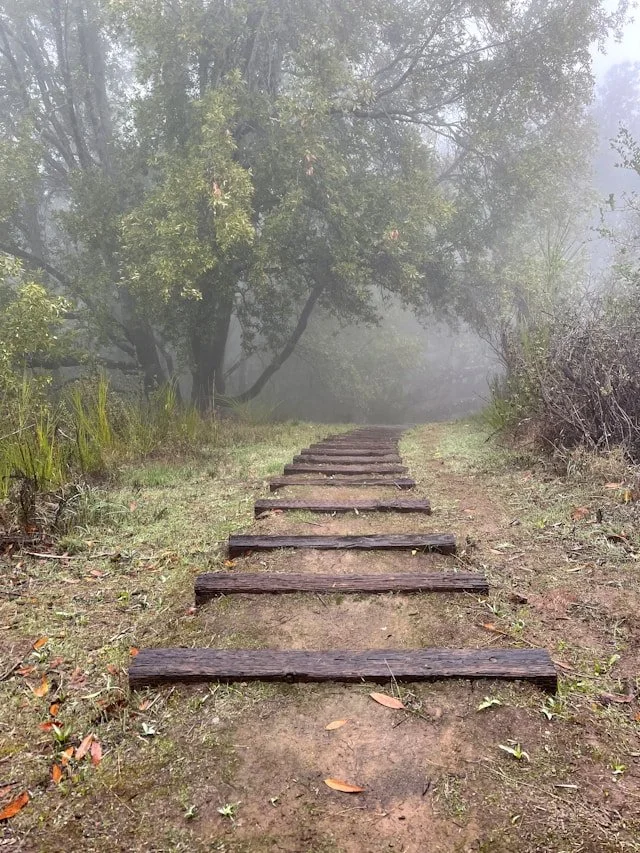
Photo by Rosie Steggles on Unsplash