The Long Light of Christmas - Epiphany
Epiphany.
When most of us use that word, we mean it in a much different way than this post will lead us. According to Merriam-Webster, the definition of the way we use that word every day is: an illuminating discovery, realization, or disclosure.
However, the first definition entry under Epiphany is this: a Christian festival held on January 6 in commemoration of the coming of the Magi as the first manifestation of Christ to the Gentiles or in the Eastern Church in commemoration of the baptism of Christ.
Of course, in my dictionary, Epiphany marks the end of Christmastide, meaning that any day after Epiphany the Christmas decorations may be put away (for 2026, this will be the weekend of January 10).
Ok…back to the ‘real’ post content!
Today is Epiphany – the revelation of Christ to the Magi.
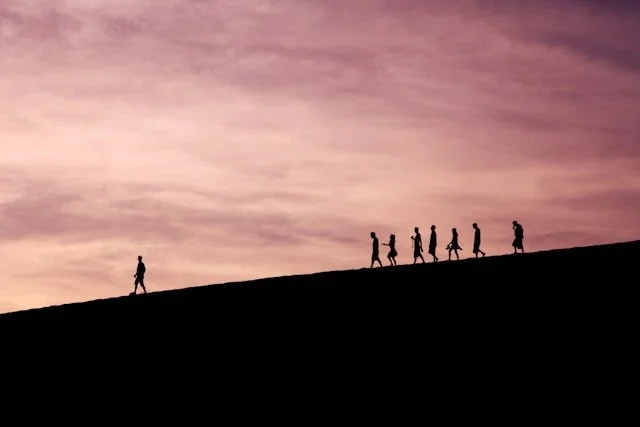
Epiphany begins not with arrival, but with movement. With eyes continually lifted toward the horizon, gazing into the skies at the start, watching for a light that feels both impossibly far and deeply compelling. The Magi do not know exactly where they are going; only that something has been revealed, and it is worth leaving home to follow. They trust a light they can see but not yet touch. And in that trust, Epiphany quietly asks us: What light are you watching for, and what might it ask you to do?
That is a sobering question when we really stop to consider what the answer might mean.
The ones who recognize the sign of Christ’s birth are not the religious insiders of the time. They aren’t the locals from the region who have already heard about what others have seen in detail. They are strangers, seekers from afar. The Magi notice what the powerful and the familiar overlook: that God is on the move, revealing himself in unexpected ways and unexpected places. Sometimes distance sharpens vision.
Their journey is not rushed or dramatic; it is steady, attentive, and costly. Epiphany honors this kind of faith: a long obedience shaped by hope, guided by light, and willing to change course along the way.
Am I walking in that same long obedience?
Epiphany declares that God’s self-revelation is not private or protected: it is generous and expansive. The light of Christ does not belong to one people, one place, or one way of knowing. As Isaiah proclaims, it rises so that nations may come and kings may be drawn by its brightness. (Is. 60:3)
This is the scandal and the beauty of Epiphany: God meets seekers where they are, speaks their language, and honors their search. The light is not guarded at the center, focused in just one spot; it shines outward, inviting all who are willing to follow.
During this series of posts over the Christmastide, following the waiting and culmination of Advent at the birth of Christ, we have traced the Long Light of Christmas. The light appeared in the quiet vulnerability of the Incarnation, God with us. It stayed, refusing to vanish once the moment passed or the season shifted. That light has oriented us, centered us, grounded us: helping us name what is true, what matters, what is worth paying attention to. And now, at Epiphany, the movement changes: the light that comforted and clarified us begins to send us.
A lighthouse does not chase ships; it simply shines. Some see the light from the safety of shore, reassured that they are not alone. Others follow it because the sea is rough, and they must. It is the same light that reaches both. Epiphany reminds us that God’s presence is steady and faithful: visible from afar, trustworthy enough to guide us home, and strong enough to draw us forward when staying put is no longer an option.
The global Church has observed Epiphany (celebrated on January 6) for centuries as the moment Christ is revealed to the nations. While Christmas proclaims God with us, Epiphany announces God for the world. It centers on the visit of the Magi, but its meaning stretches far beyond that single scene.
Across the world, Epiphany is marked with feasts, processions, blessings of homes, candlelight services, and prayers for mission and justice. In many cultures, it is even more widely celebrated than Christmas itself, a reminder that revelation is not meant to stay small or contained. At its heart, Epiphany insists that the Incarnation has consequences. The light that enters the world does not retreat; it continues to illuminate, confront, and invite. Christ is revealed not just to be adored, but to be followed.
If you’re like me, you didn’t grow up knowing anything about any of the liturgical days on the church calendar, which means epiphany was probably just a word you used when you came to a conclusion or realization about some random thing or fact. But here’s the truth: you don’t need a liturgical calendar or formal rituals to enter Epiphany.
You can begin simply by paying attention: Where do you notice light breaking in, maybe in clarity or conviction, or hope, after the holidays have passed? Name it. Give thanks for it.
(FYI – we are not good at naming things we experience in our lives. This is a practice we should seek to refine, I believe. Perhaps that is a post for a future date!)
Light a candle at the beginning or end of the day this week and pray, “Christ, reveal yourself again.” Ask not just what God is showing you, but where that revelation might be asking you to move, speak, or love differently.
Epiphany can also be practiced through generosity: giving something meaningful away, as the Magi did. Or by choosing one intentional act of reflection: becoming a mirror of the light you have received.
Epiphany does not ask us to find our own light or manufacture a light…we are not its source. It invites us instead to carry what has already been given - into ordinary days and familiar places. To let what has been revealed in us be revealed through us.
The world does not need brighter spotlights. It needs steady reflectors; people shaped by the Long Light of Christmas, willing to walk by it, trust it, and let it shine on.
So, as I have waited to take down Christmas decorations until Epiphany, and maybe you have as well, I need to take time to remind myself:
Christmas does not end…it shines on.
And the light that found us now sends us into the world.
Photo by Duncan Sanchez on Unsplash