
Mother's Day at the Hospice Door
I waited until evening to share this because I know Mother’s Day is tender for many people. For some, it is beautiful and full of flowers, brunch, cards, and noisy tables. For others, it is complicated. For some, it is unbearable. For many of us, it is all of those things at once.
This year, I am feeling the full weight of grief in ways I did not expect.
It is my first Mother’s Day without both my mother and my son. I am a motherless child and a childless mother, and I am not sure there are words wide enough for that kind of ache. I have been holding so much since my mom died last July. Some of it I can name publicly, and some of it belongs only in the smallest circles of my family. But even the things I cannot fully say are still part of what is breaking me in places I have tried desperately to keep together.
Grief is strange that way. It does not only ask us to grieve what happened. Sometimes it asks us to grieve what is happening. It asks us to grieve what was lost years ago, what is being lost now, and what we are only just beginning to understand was lost all along.
This year I am grieving my mom in a new way. I am grieving my son in a new way too. I am grieving the past with new eyes, the present with tired hands, and the future with questions I do not know how to ask yet.
And Mother’s Day is the day all of that seems to gather in one place.
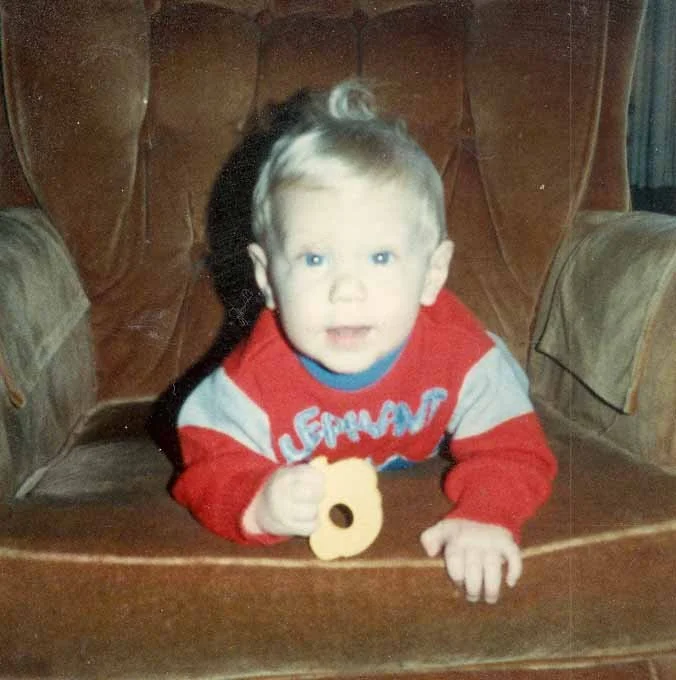
On Mother’s Day, May 14, 2017, we walked our son into hospice.
I still do not know how to make sense of that sentence. A day meant to celebrate mothers, birth, life, and all the complicated beauty of nurturing became the day we walked our son toward death. It was surreal. It felt like the whole world was speaking one language while we had been dropped into another country entirely.
There were probably flowers somewhere. There were probably Mother’s Day cards on store shelves and families waiting for tables at restaurants and people posting pictures with captions about being blessed. And we were walking through doors that felt, at first, like cell doors closing behind us.
I remember the weight of watching everyone absorb the reality in their own way. My husband. Our daughter-in-love. Our three-year-old grandson. My parents. And our son, who was barely able to participate in the decision or fully understand what was happening. That may be one of the quiet cruelties of terminal illness. The people who love the dying often have to carry the weight of decisions the dying person would have carried if their body and mind had not already begun slipping beyond our reach.
There is no Hallmark card for that part of motherhood.
There is no easy scripture verse that makes it feel fine.
Psalm 13 begins with the words, “How long, O Lord?” and some years that feels like the most faithful prayer I have. Not because it is polished. Not because it sounds hopeful. But because it is honest. Lament is not the absence of faith. Lament is what faith sounds like when it is crying from the floor.
I used to think faithfulness would mean being steady. Calm. Peaceful. Able to say the right things and trust God without trembling. But I am learning that sometimes faithfulness looks like staying when every part of you wants to run. Sometimes it looks like sitting beside a hospice bed in the middle of the night, listening to the strange sacred silence of the room, and whispering prayers you are not even sure you believe strongly enough to pray.
And somehow, God was there.
I do not say that lightly. I do not say it in a way that makes any of it less horrific. I do not say it to wrap a bow around the death of my son or the death of my mother or the complicated grief I am carrying now. I say it because even in that place, even behind those doors, even in the valley of the shadow of death, there were moments of mercy.
The hospice staff became ministers of mercy to us. They honored our son. They honored our family. They taught us how to wait in a room where heaven felt painfully close and impossibly far away. They cared for his body with dignity. They made room for our tears, our silence, our questions, and our exhaustion.
And slowly, the place that first felt like a prison became something else. Not less sad. Not less final. But somehow holy.
There is an aspect of death that feels, in the strangest and most sacred way, like birth. Not because death is natural in the way God intended the world to be. It is not. Death is an enemy. Scripture says so. But for those held in Christ, death is not the end of the story. It is a passage from this life into the presence of God. It is labor of a different kind, and those who sit at the bedside become witnesses to something they cannot control, cannot stop, and cannot fully understand.
That does not make it easy.
It does not make it pretty.
It does not keep a mother’s heart from breaking.
John 11 tells us that Jesus wept at the tomb of His friend. He knew resurrection was coming, and still He wept. That matters to me. It tells me that hope does not erase sorrow. It tells me that faith does not require me to stand at the graveside, or the hospice bed, or the empty chair at Mother’s Day and pretend I am not shattered.
Jesus does not shame tears.
He joins them.
So tonight, I am letting this Mother’s Day be what it is. Heavy. Complicated. Holy in places. Painful in others. I am not trying to make it more inspirational than it feels. I am not trying to explain all the layers or expose all the details. Some grief needs witnesses, but not an audience. Some stories need to be marked without being fully opened.
This is me making a mark in the sand.
This is me saying May is hard. Mother’s Day is hard. Being a motherless child is hard. Being a childless mother is hard. Holding both at the same time is something I do not yet know how to do well.
But I am still here.
Still loved by God.
Still held by the One who is near to the brokenhearted.
Still learning that lament can be prayer. Still learning that numbness is not failure. Still learning that the valley of the shadow of death is not a place we walk alone, even when it feels unbearably lonely.
If Mother’s Day is tender for you too, for whatever reason, I want you to know you do not have to force it into something easier for everyone else. You do not have to smile your way through grief. You do not have to explain what you are not ready to say. You do not have to make your pain palatable.
You can simply tell the truth.
Even if the truth is only this:
“Lord, this hurts.”
And maybe, for tonight, that is enough.
Posts in this Series