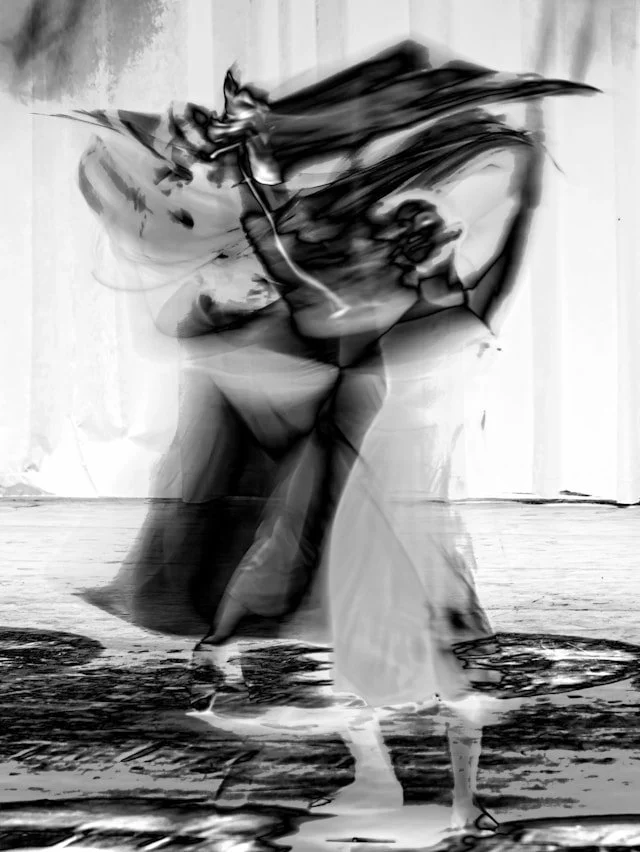

When Grief Shows Up Sideways
(I will get back to “normal”…whatever that is…posts soon. Right now is just a season of processing a new layer, and blogging is a part of that journey. Welcome to the ride!)
Sometimes grief doesn’t announce itself as sadness.
Sometimes it shows up sideways. It looks like irritability, numbness, distraction, a messy kitchen, a short fuse, or the inability to remember why you walked into a room. Sometimes it looks like scrolling too long, sleeping too much, or not sleeping at all. And sometimes, as I was reminded this weekend, grief looks remarkably productive.
This thought started bubbling up at a memorial service for a child who was struck and killed a few weeks ago. I wrote about the beginning of that grief in my last post, The Grief We Learn to Carry. Since this tragedy, I’ve spent a lot of time wandering around inside my thoughts, emotions, and memories. I think that’s part of what happens when someone else’s loss brushes up against our own. Their grief isn’t ours, and we shouldn’t make it ours, but once again, our bodies sometimes recognize the landscape before our minds have figured out where we are.
I arrived early Saturday morning to help wherever I was needed and to be a familiar face for a close friend of the family who would be speaking during the service. If you ever have to speak at a memorial service for someone you love, it can be a gift to have one or two people you trust standing at the back of the room. Then, if the words become hard to find or the room feels too full, you have a safe face on which to focus. A dear friend did that for me at PJ’s service, and it felt right to offer the same kindness.
I got there early enough that I thought I could knock out a little work before anyone needed me. That was my first mistake, thinking nothing would have started yet. The band was already rehearsing. From my office, I heard them singing “You Are My Sunshine,” and immediately felt the sting behind my eyes. I swallowed hard and tried to push the lump in my throat down into my stomach.
It didn’t work.
The next song was “Homesick.” That song lived on repeat after PJ died, alongside “Dare You to Move” by Switchfoot and “Home” by Chris Tomlin. Suddenly, I wasn’t standing in my office on a Saturday morning in 2026. My body had carried me back to June 17, 2017, and to the same large room right next to my office.
I stopped fighting the tears and walked into the worship center, where I sat in the back for the rest of rehearsal.
The room felt painfully familiar. The pictures and displays held the things this sweet little boy loved. His were Sonic the Hedgehog and baseball. PJ’s were Star Wars, guitars, and G. K. Chesterton. The details were different, but the loving work of trying to represent an entire person with a table full of treasured things was the same.
Then, as if someone flipped a switch, I stood up, went to my office, wiped my eyes, and gave myself a surprisingly stern version of, “Suck it up, Buttercup.”
And I went into doing mode.
I looked for things to set up, set out, straighten, or clean. I checked restrooms that weren’t even close to where anyone would be using them. I stood at the doors to greet people, holding them open and offering a smile and a gentle “good morning.” If there was something I could do to keep myself from getting teary again, I did it. At some point, while standing in a rare moment of stillness at the door, a question finally caught up with me:
Why am I working so hard to avoid feeling this?
To be clear, there was work to do that morning. Serving a grieving family is holy work, and sometimes having a task gives our overwhelmed minds and bodies a place to land. Doing isn’t automatically denial. Making a meal, folding the laundry, arranging photographs, holding a door, or wiping down a counter can be an embodied act of love when words aren’t enough.
But sometimes doing becomes hiding.
Staying busy can be a seemingly noble way to avoid our own hearts. We tell ourselves we’re being helpful, responsible, or strong. Sometimes we are. Sometimes we’re also hoping that usefulness will keep grief from finding us.
I won’t sparkle it up. Some wildly misplaced pride was tangled into my helpfulness that morning. Somewhere in me was the belief that I could decide when the wave was allowed to come. I could control the timing. I could give grief a calendar invitation for later, preferably when the service was over, everyone was cared for, spaces were clean, and I was alone somewhere convenient.
Grief has never been especially respectful of my calendar. And I know that – why I decided I could change that fact is beyond me.
It arrives in grocery store aisles and worship songs. It comes through a familiar smell, an old joke, a particular date, or a room arranged almost exactly the way it was arranged nine years ago. It can sit quietly through the crisis and then appear because someone asks an ordinary question in an unexpectedly tender voice. It can make us cry, but it can also make us impatient, forgetful, controlling, exhausted, or incredibly efficient.
Sometimes grief doesn’t feel like grief at all. It simply feels like we’re failing at being the person we usually are.
We often understand grief as something that happens primarily in our thoughts. We know someone is gone. We remember what happened. We miss them. But grief isn’t confined to the mind. It lives in bodies that tense at familiar sounds, stomachs that tighten without warning, eyes that sting before we understand why, and nervous systems that recognize danger and loss before we have words for either one.
Our bodies know grief because they have known love.
That isn’t weakness. It isn’t a failure to heal, and it doesn’t mean we’ve somehow returned to the beginning. When an old grief rises in the presence of a new loss, it doesn’t erase all the adapting, learning, and living we’ve done. It simply reminds us that love leaves a mark. We aren’t healed from loving someone. Over time, our minds and bodies learn to hold the tension of love and loss, joy and pain, memory and absence. Then something touches that tender place, and we feel again how much we're carrying there.
Ecclesiastes tells us there is “a time to weep and a time to laugh; a time to mourn and a time to dance” (Ecclesiastes 3:4). I don’t think those times always arrive in neat, separate seasons. Sometimes mourning and laughter sit beside each other at the same table. Sometimes we dance while also limping. Sometimes a song that once brought comfort makes us cry in the back row of a worship center. We don’t have to force those experiences into cleaner categories than the ones God has given us.
Psalm 34:18 says, “The Lord is near the brokenhearted; he saves those crushed in spirit.”
I have loved that verse for years, but I wonder how often I try to be near everyone else’s broken heart while quietly running from my own.
God doesn’t ask us to become useful enough to earn his nearness. He doesn’t wait for us to pull ourselves together before sitting with us in the ache. He is already near. The invitation isn’t to manufacture his presence but to stop long enough to notice that we aren’t alone.
That may be one reason simply being can feel harder than doing. Doing gives us the illusion of control. Being asks us to receive. It asks us to admit that we can’t organize, clean, serve, or achieve our way out of love’s pain. It asks us to let God meet us in the place where we don’t have a plan.
Maybe it asks us to let other people meet us there too. Romans 12:15 tells us to “Rejoice with those who rejoice; weep with those who weep.” We’re often more comfortable with the first half, and even when we can weep with someone else, we may struggle to let them weep with us. Yet shared grief is part of how the body of Christ carries what would be too heavy for one person to hold alone.
This doesn’t mean we collapse into every feeling the moment it appears. Sometimes we need to finish the task, care for the child, welcome the guest, or get through the meeting. Sometimes we tell grief, “I see you. I can’t sit down with you right this second, but I will come back.” That’s different from pretending it isn’t there. One is a compassionate pause. The other is an attempt to lock the door.
The goal isn’t to become perfectly skilled at grieving. I don’t think such a person exists. The goal may simply be to grow more honest about the ways grief is showing up and more willing to meet it with tenderness instead of judgment.
Maybe the messy kitchen isn’t laziness. Maybe the short fuse isn’t proof that you’ve become an unkind person. Maybe the numbness isn’t evidence that you didn’t love enough, and the sudden tears don’t mean you’re falling apart. Maybe your relentless productivity isn’t only strength. Perhaps these are signals from a heart, brain, and body doing their best to carry something heavy.
We can pause long enough to ask: What is happening in me right now? What might this feeling or behavior be trying to protect? Am I doing this because it needs to be done, or because stillness feels unbearable? What would it look like to let God sit with me here? The answers may not come immediately. That’s okay. The asking itself can be an act of attention and mercy.
Grief will probably keep showing up sideways. It will find its way into our tempers, our bodies, our calendars, our kitchens, and the songs we thought we could hear without crying. It may even dress itself up as competence and start checking restrooms no one is going to use.
When it does, perhaps we can resist the instinct to scold ourselves back into productivity. Perhaps we can meet what rises with curiosity and compassion. We can let the tears come when they come. We can do the next necessary thing when it truly is necessary. And we can remember that neither our sadness nor our distraction, neither our stillness nor our service, places us outside the gentle presence of God.
Grief exists because love existed first. Our brains and bodies remember what mattered, even when we’d rather they choose a more convenient time to remind us. We don’t have to outrun that remembering. We don’t have to manage it into submission.
We can simply be here, loved and aching, held by the God who comes near.
Photo by Sixteen Miles Out on Unsplash