
The Grief We Learn to Carry
After finishing the Becoming series last week, I thought this post would be a recap. I would look back fondly on ten posts about Church Mothers and Fathers and have some wise words to wrap it all up with a nice little bow.
But I don’t have wise words.
For the past four days, I’m not sure my emotional body and physical body have even been residing in the same zip code. Most of the words coming out of my mouth have been the automated ones required to navigate care and schedules and get ahead of anything that might go bump. There have been plenty of other words in my head, too. Not all of them pretty and Christian-like.
Or maybe they are.
Because the words that keep returning are Scripture, specifically a part of Scripture I would’ve happily avoided for a very long time:
“Blessed are those who mourn, for they will be comforted.” Matthew 5:4, CSB
On Thursday morning, our community experienced something unimaginable, until it becomes part of your own story. One of our families, who have been part of our church since Mom was a teenager, lost their 11-year-old son after he was struck by a car while riding his bike to school.
There really are no words for that.
As pieces came together and those of us in the office began receiving calls and texts with more information, the devastation started settling over all of us. Someone went to the hospital to support loved ones. Pastors were called. Calls from the public were screened. Leaders who needed to know so that care could begin were notified.
And then we sat.
And waited.
When I say this kind of loss is unimaginable, I mean it. Thank God it is unimaginable for most people, because you almost have to experience the death of a child before you can begin to understand the particular wrongness of it. Even then, every child, every death, and every family is different. There are pieces of someone else's loss we simply cannot know.
I learned, or maybe had reaffirmed, that when tragedy hits, I go into protective mode. My deeper emotions shut down because there are things to do, and doing feels safer than feeling. There are calls to take, people who need prayer, questions to answer, plans to make, and sometimes just a person who needs someone willing to sit and listen.
The doing. Not the feeling.
Except, of course, the feelings don't actually disappear. I could feel them sitting right under the surface, waiting. Every once in a while they would bubble up and spill over before being carefully tucked back in again. Then this morning, in the middle of a beautiful sermon and prayer for this family, our community, the children, and the school, something broke through. The emotion and the memory nearly drowned me.
There is a question people sometimes ask after the death of a child: “How do you say goodbye to your child?”
It is certainly a question a parent navigates in those immediate hours and days. But there was another question that felt even more impossible to me after PJ died:
How do I walk out of this hospital/hospice without my child?
As a mom, it felt like the exact opposite of everything I had ever understood myself to be made to do. We protect our children. We bring them home. So how do you turn around and leave your child lying in a bed, knowing they will never come home with you again?
That feeling still wrecks me.
It is what literally brought me to my knees when I walked into my house Thursday evening. Because when I thought about this precious mom having to somehow force her feet to carry her out of that hospital without her son, my body remembered. I could physically feel again the pain and confusion and sheer wrongness of the day we had to leave PJ.
And I can only imagine the added shock of having to do that when your child is eleven.
I wonder how many other grieving parents have things like this. Specific moments their bodies seem to remember before their minds have even caught up. Pieces of the day their child died that remain woven into who they became afterward.
It has been nine years for us. Nine years, and there are circumstances that make May 25, 2017 feel like another lifetime. Others make it feel like last Tuesday. And then there are people who, bless their hearts, encounter a reaction like that and wonder aloud whether perhaps enough “work” has been done to bring about healing.
Bless it.
And I keep coming back to:
“Blessed are those who mourn, for they will be comforted.”
The Greek word translated mourn is pentheō, a word used for mourning, lamenting, grieving. It carries the sense of grief that becomes manifest, grief that cannot simply remain neatly hidden inside.[1]
I used to hate the word lament. I remember when it started becoming a regular part of my vocabulary. I can even remember sitting in a hospital waiting area with one of our pastors; the poor guy hadn't even been on staff very long, while he read Psalms and Lamentations with us.
There was lament everywhere. Jeremiah certainly wasn't trying to make grief tidy enough for polite company. That's the thing about lament. It doesn't require us to disguise our humanity, or pretend pain has become manageable before we bring it to God. It gives grief somewhere to go.
And right there in the Beatitudes, Jesus speaks directly to the mourners. He doesn't rush them. He doesn't congratulate the people who managed to keep it together. He doesn't tell them to hurry toward the other side of grief so they can finally be useful again.
He blesses the mourners themselves.
Then comes the promise: they will be comforted.
Not, “they will forget.”
Not, “they will stop missing.”
Not even, at least this side of heaven, “this will stop hurting.”
They will be comforted. God will meet them there.
Strangely enough, neuroscience has become another kind of comfort to me.
God bless neuroscientists who spend their lives studying the human brain, because the more they discover, the more miraculous that three-pound mass of gray matter seems. And grief research has given us language for something grieving people have known in their bones forever: losing someone you deeply love isn't like sustaining an injury that eventually disappears once you've healed correctly.
Grief is, in part, a massive act of learning.[2]
When you love someone deeply, your brain builds that person into its understanding of the world. You know where they are. You anticipate their voice. You expect them to walk through the door, answer the phone, sit in their chair, show up at Christmas. Their existence isn't simply information you know. Your brain has learned them.
Then they die.
Now your brain is being asked to hold two things that seem impossible to hold together. This person is still deeply attached to me, deeply loved, deeply a part of who I am. And this person is no longer physically here.
Researchers who study grief describe this as a kind of conflict between what our attachment systems have spent years learning and the new reality our brains must repeatedly encounter.[2] The brain doesn't receive the news once and say, “Got it.” It learns through experience, over and over again, that the person it still expects to find isn't coming back.
Maybe that's why you reach for the phone before remembering.
Maybe that's why you hear a laugh across a room and turn your head.
Maybe that's why nine years later someone else's hospital room can suddenly put your own body back inside the one you left long ago.
This is also part of why grief can hurt so physically. Research into social loss has found overlap between some of the neural systems involved in the distress of separation and those involved in the unpleasantness of physical pain.[3] The broken heart isn't merely poetic language. Our bodies participate in grief, too.
Over time, the brain adapts. New patterns form. We learn how to live in a world where the person we love is no longer physically present. But adaptation isn't erasure. The relationship isn't deleted to make room for the loss. The brain learns to hold both.
Love and absence.
Memory and reality.
Joy and pain.
And maybe that is why the sentence I've held onto since the immediate pain began on May 25, 2017 still feels true to me:
The pain doesn't go away. It gets softer.
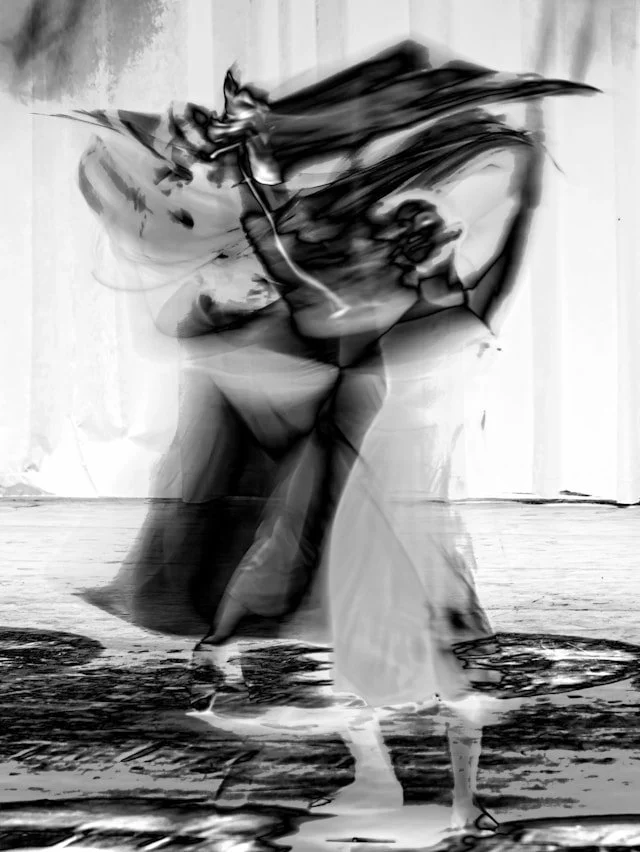
I think of grief and love as dance partners. At first, they're in a dance battle, each one fighting for the spotlight. Grief is loud, and love almost hurts too much to look at because every beautiful memory also reminds you of what you've lost.
But over the years, they begin finding a rhythm.
Sometimes grief takes center stage. Sometimes love does. Sometimes a memory makes you laugh until your stomach hurts, and sometimes that exact same memory catches you on another day and takes your breath away.
Eventually you realize they're not actually opponents.
They've been dancing together all along.
None of this makes the agony of a newly grieving parent any smaller. Knowing what brains do with grief doesn't make Thursday less horrific. It doesn't make me less heartbroken for these parents or less aware of the days, weeks, months, years, birthdays, school milestones, holidays, ordinary weekdays, and unexpected moments that lie ahead.
But it does remind me of something I desperately need to remember.
We were never asked to become people who no longer grieve.
We weren't created to love deeply and then somehow become untouched when that love encounters death. Our brains and bodies do something far more remarkable. They slowly learn to carry the tension of love and loss together.
And our faith gives us no reason to be ashamed when the grief becomes visible again.
“Blessed are those who mourn.”
Not those who used to mourn.
Not those who have finished mourning.
Those who mourn.
“For they will be comforted.”
We are not alone here.
Even here.
Especially here.
[1] Pentheō (πενθέω), “to mourn, lament, grieve.” See Strong's Greek 3996 and Thayer's Greek Lexicon, Matthew 5:4.
[2] Mary-Frances O'Connor and Saren H. Seeley, “Grieving as a Form of Learning: Insights from Neuroscience Applied to Grief and Loss,” Current Opinion in Psychology 43 (2022): 317–322.
[3] Naomi I. Eisenberger, “The Neural Bases of Social Pain: Evidence for Shared Representations with Physical Pain,” Psychosomatic Medicine 74, no. 2 (2012): 126–135. DOI: 10.1097/PSY.0b013e3182464dd1.
[4] For a broader overview of how body, mind, and brain adapt following bereavement, see Mary-Frances O'Connor, “Grief: A Brief History of Research on How Body, Mind, and Brain Adapt,” Psychosomatic Medicine 81, no. 8 (2019): 731–738. DOI: 10.1097/PSY.0000000000000717.
Photo by Hulki Okan Tabak on Unsplash