
The Table and the Towel
Today is Maundy Thursday.
Most of us do not even know what maundy means. The word comes from the Latin: Mandatum novum do vobis ut diligatis invicem sicut dilexi vos — “A new command I give you, that you love one another as I have loved you.” Mandatum. Command. Invitation. Example. Jesus’ call to His disciples, spoken not from a distance, but from the middle of a meal, after He had bent low enough to wash their feet.
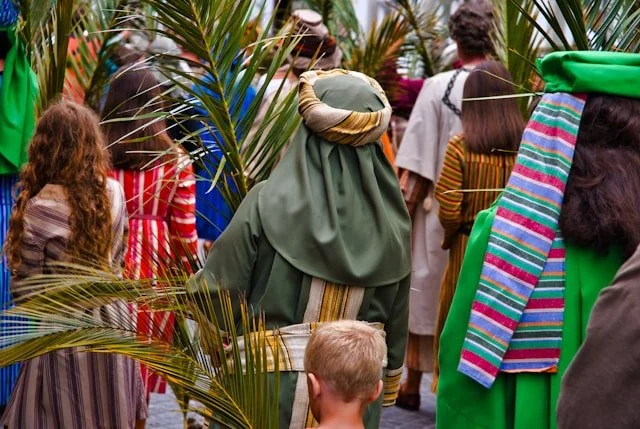
This week began with celebration. Jesus entered the gates on a foal to cheering, clapping, and adoration from people who welcomed Him as King, yet still did not fully understand the kind of King He was. The streets were loud with praise. There were palms, voices, movement, and expectation. But now the week has narrowed. The fanfare has faded. The smiles and shouts have given way to something heavier, though the disciples cannot yet name it. We have gone from praise and palms to a table and a towel.
The table is set for a meal like the many they had shared before. Bread. Wine. Familiar faces. Conversation, laughter, debate, the ordinary rhythms of friendship and life together. But this meal carries a weight the others did not. Jesus knows what is coming. He knows betrayal is already in the room. He knows denial will come before morning. He knows these men, His friends, will not remain as steady and brave as they might hope. And still, He chooses the table. Still, He gathers them close. Still, He offers them His presence.
And before the meal unfolds fully, Jesus does something that should still stop us in our tracks. He lowers Himself to serve them with a towel.
The Lord kneels.
The One they call Teacher takes dust-caked, road-worn, ordinary human feet into His hands and begins to wash them. The One who spoke the world into being stoops before confused, prideful, beloved men who do not understand what He is doing and who will, in just a little while, fail Him in all the ways they swore they never would. What kind of love does that? What kind of love kneels before feet that will soon run away?
It is not sentimental intimacy. It is not soft, vague affection. It is love expressed through humility, tenderness, and surrender. It is love that comes close enough to touch what is dirty. Love that does not wait for worthiness. Love that does not withdraw when betrayal is near. Maundy Thursday reminds us that Jesus did not only love in grand gestures or sweeping declarations. He loved up close, with a towel in His hands and betrayal already in the room.
And maybe that is why Peter protests. Maybe that is why I would too.
Because receiving that kind of love is deeply unsettling.
The table and the towel are both beautiful invitations, straight into the hospitality of Jesus. At the table, we are welcomed. Fed. Gathered in. Given a place we did not earn. When I think of the table I am invited to sit at, the goodness and blessing and beautiful grace of it all can undo me. There is room for me there. Room in the presence of Jesus. Room in His life. Room at the meal He prepares. That kind of welcome is almost too much to take in.
But the towel is different. The towel is harder.
The table says, “Come and sit with Me.”
The towel says, “Let Me touch what you would rather hide.”
And that is where I pull back.
No, Lord. I will not accept that invitation. Please let me clean myself up first. Let me fix what is broken, hide what is ugly, prove myself a little more, make myself more presentable. Then I will come. Then I will sit down. Then I will say yes.
But nothing I could ever do would be enough. There is not a basin deep enough for me to clean myself. There is not enough striving, performing, apologizing, polishing, or pretending that could wash away what only Jesus can cleanse. The whole point of Maundy Thursday is that He knows this. He knows I cannot make myself clean enough for the table, so He comes with the towel before I ever ask.
That is the scandal and the beauty of this night.
Jesus serves before the disciples understand.
Jesus cleanses before they are faithful.
Jesus loves before they have proven worthy.
Jesus gathers them to Himself while their fear, pride, confusion, and coming failure are all still intact.
And He does the same for us.
We often say we want Jesus powerful, victorious, unmistakably King. And He is. But Maundy Thursday reminds us that His power does not look like ours. His kingship is revealed not only in triumph, but in kneeling. Not only in glory, but in washing feet. Not only in being served, but in serving. What unsettles us is not simply that we are called to love like that. It is that we are first asked to let ourselves be loved like that.
To let Him kneel before us.
To let Him wash what we cannot wash ourselves.
To let Him welcome us to the table before we have managed to become impressive.
“Love one another as I have loved you,” Jesus says.
That command carries weight because it is not abstract. It is not detached from action. It is not mere sentiment. It is love with water dripping from tired feet. Love with bread broken and shared. Love with betrayal already moving through the shadows and Jesus loving anyway. Maundy Thursday is not only about remembering what Jesus did. It is about being undone by how He did it.
He loved them to the end.
And that means tonight is not simply a call to admire His humility. It is a call to receive it. To come to the table with empty hands. To stop insisting we can scrub ourselves clean enough to deserve a seat. To let the Lord who kneels low love us in the places we would rather keep hidden.
The table and the towel.
Welcome and cleansing.
Communion and humility.
Hospitality and surrender.
This is the shape of Christ’s love.
And maybe the invitation of Maundy Thursday is simply this: come to the table, and do not resist the towel.