All Shall Be Well: Even Here
This is the second post in the Becoming series.
In this series, I’m walking with some of the church mothers and fathers, not as dusty old names from church history, but as companions who help us pay attention to grief, calling, healing, courage, ordinary faithfulness, and the long road of being formed by Jesus. The first companion was Augustine of Hippo, and we looked at the idea that some of our restlessness may not be rebellion. It may be homesickness for God.
Today, I want to sit with Julian of Norwich.
When I think about her, Julian feels like the kind of companion I didn’t know I needed until I found her words and thought, “Oh. She understood something my heart has been trying to say.”
Julian lived in 14th-century England during a time marked by plague, suffering, uncertainty, and death. She became known as an anchoress, which is not exactly a word we use every day. Think of it almost like a female monk, a woman who chose a life set apart for prayer, silence, study, and seeking the face of God. She lived in a small room attached to a church, and from that hidden place, her life became anything but small.
She was a theologian, a deep pray-er, a writer, and a thinker. She was a woman whose words shaped people then and still shape people now. Her book, Revelations of Divine Love, is believed to be the first book written in English by a woman. Her writings are also the only surviving words of an anchoress in the English language. I don’t want to rush past that. In a time when women had very little power, very little public voice, and very few platforms, Julian wrote words that still speak across centuries.
That alone makes her a larger-than-life church history woman for me.
But what makes Julian such a companion, for me, isn’t only that she wrote. It’s what she wrote from.
She didn’t write from comfort. She didn’t write from a clean, easy life where everything made sense. During a severe illness (and let’s be honest, just about any illness in the 1300’s could turn severe quickly), she experienced visions centered on the love and suffering of Christ. Later, she wrote from Scripture, prayer, and those visions as she wrestled with huge questions about God, sin, suffering, mercy, and love.
And maybe that’s why I trust her words. She wasn’t tossing out inspirational phrases from a safe distance. She was asking the questions many of us still ask.
How can God be good when the world is so broken? How can suffering and sin be this real, and God still be sovereign? How can so much be wrong, and yet somehow, in Christ, all shall be well?
That’s the line Julian is most known for:
“All shall be well, and all shall be well, and all manner of thing shall be well.”
I used to hear a line like that and think it sounded sweet, but maybe a little too simple. Like something stitched on a pillow by someone who’d never had her life fall apart.
But that’s not Julian.
Once again, Julian lived in a world where hardship wasn’t theoretical. The realities of sickness, death, vulnerability, and suffering weren’t tucked away where people could pretend they didn’t exist. She knew the world was hard. She knew people suffer. She knew sin was real. She knew the human heart can be a mess. And still, somehow, she could say, “All shall be well.”
That’s not shallow optimism.
That’s resurrection-shaped hope.
Why does that matter? Well, I think that matters because most of us don’t need someone to tell us everything is fine. Everything isn’t fine. Not always. Not in this world. Not in our families. Not in our bodies. Not in our stories. Not in the Church. Not in the places where people wound each other and call it truth, or control, or leadership, or love.
If you are a regular reader of this space, you already know that May always reminds me that grief doesn’t send an itinerary. It doesn’t politely tell you when it plans to arrive. It just shows up. So many hard, life changing days for me all live close together on the calendar. I’ve written a lot about that already, so I don’t want to park there for long in this post.
But I do want to pause to remind all of us, once again, that grief, loss, and suffering have a way of reshaping the questions we ask.
Sometimes the question isn’t only, “Why did this happen?” Sometimes the deeper question is, “What does this mean about God?” And sometimes, if we’re honest, if I’m honest, the question is, “What does this mean about me and God?”
That question didn’t start for me only in the obviously tragic places. Yes, grief shaped it. Church hurt shaped it. Loss shaped it. But so did childhood. So did rules. So did expectations. So did family systems and manipulation and the complicated ways divorced families can form a child. So did versions of faith that made God seem more easily disappointed than tender, more suspicious of me than near to me.
For a long time, I think I carried a quiet assumption that no one from church history could possibly understand the particular way my own story had shaped me. Which is, let’s be honest, both very human and slightly dramatic. There’s a little first-world “poor me” tucked in there for sure. But then I began reading the church mothers and fathers. I started school. I started being allowed to be curious. Or maybe more accurately, I started allowing myself to be curious.
Even before seminary, after PJ died, a pastor shared The Valley of Vision with me. That was the first time I remember feeling safe reading something extra-biblical outside of an approved Bible study book. And yes, in the world I grew up in, even Puritan prayers would’ve been considered suspect if they weren’t on the approved shelf.
That opened something in me.
Then seminary threw the door wide open.
I began to realize that the people who came before us weren’t distant, untouchable, perfectly composed saints. They were humans trying to follow Jesus through suffering, confusion, loss, sin, calling, questions, and ordinary life.
Julian became one of those witnesses for me.
Here was a woman who willingly chose a hidden life of prayer, study, and seeking God, and yet she still wrestled with how to understand suffering and sin in the world. She still had to bring her questions before the Lord. She still had to receive reassurance. She still had to learn, somehow, to hold pain and trust in the same hands.
Don’t we all do that?
How many times have we said, or heard someone else say, “How can a God who is so good let all of this happen?” Or, “This must break His heart.” Or, “I just don’t understand why He allowed this.”
Those aren’t small questions. They’re not questions we should slap a Bible verse on and rush past. They’re questions that come from living in a world where suffering is real.
And the world is hard.
People can be the worst. And by people, I mean me, too. And you. All of us. We hurt each other. We lie. We cheat. We fail. We choose poorly. We protect ourselves. We grab for control. We wound people we love. We ignore people we should see. We sin by choice, and then we suffer under the weight of other people’s choices, too.
If an alien from another planet came and watched humanity for a day, or maybe even just an hour, it might conclude that we’re an absolute disaster. And some days, honestly, that wouldn’t be the wildest conclusion.
But God.
That’s not a cute transition. It’s the only reason hope makes sense.
God is the One who makes right what sin has broken. God is the One who redeems the suffering we endure and the suffering we cause. When we hurt others and choose the hard, honest work of peacemaking, not peacekeeping, not pretending, not false peace, God can redeem even that pain. When we or someone we love gets sick and healing doesn’t come on this side of heaven, God can redeem that pain. When we can’t understand why something is happening, God can meet us even in the questioning and the doubt.
That doesn’t mean everything is okay. It doesn’t mean evil is somehow not evil. It doesn’t mean grief isn’t grief. It doesn’t mean we don’t name harm clearly, repent deeply, grieve honestly, and work for what’s right.
It means Christ gets the final word.
Julian’s “all shall be well” isn’t a denial of pain. It’s a declaration that pain is not ultimate.
That’s why her words feel connected to the sovereignty of God for me. Not sovereignty as a cold doctrine used to shut people down when they’re hurting. Not sovereignty as a way to avoid lament. Not sovereignty as a theological club we swing at people when they’re asking honest questions.
I mean the kind of sovereignty that lets me say, “I don’t understand this, and it hurts, and it’s not right, but I still believe God is holding what I can’t hold.”
The kind of sovereignty that doesn’t make me less honest. It makes me less alone.
Revelation gives us this picture of where everything is going:
“He will wipe away every tear from their eyes. Death will be no more; grief, crying, and pain will be no more, because the previous things have passed away. Then the one seated on the throne said, ‘Look, I am making everything new.’ He also said, ‘Write, because these words are faithful and true.’” Revelation 21:4-5
That’s the Christian hope.
Not that everything has already been made well in the way we long for it to be. Not that we never cry. Not that death doesn’t hurt. Not that grief is easy. Not that pain is imaginary.
The hope is that God is making everything new.
The tears are real, and He’ll wipe them away. Death is real, and it’ll be no more. Grief is real, and it won’t get to reign forever. Pain is real, and it has an expiration date.
Paul says in Romans 8 that creation itself is groaning. I love that because it means the ache isn’t just in us. The whole of creation knows something isn’t as it should be. We groan. Creation groans. We wait. We hope. We long for redemption.
And somehow, hope lives there.
Not in pretending.
Not in skipping over the groaning.
Not in rushing to make everyone feel better.
Hope lives in the waiting, because the One we’re waiting for is faithful.
Even David, in Psalm 13, gives us permission to ask, “How long, Lord?” That question belongs in Scripture. Which means it can belong in us, too. Lament isn’t faithlessness. It’s what faith sounds like when it’s hurting and still turning toward God.
That’s part of what Julian gives us.
She gives us language that can hold both lament and trust. She helps me remember that Christian hope doesn’t require pretending. I can name what isn’t well and still cling to the God who promises to make all things new.
I can say, “This hurts.”
I can say, “This isn’t right.”
I can say, “I don’t understand.”
I can say, “Lord, how long?”
And I can still say, “All shall be well.”
Not because I’ve worked out the timeline. Not because I can explain the mystery of suffering. Not because I’m strong enough to hold all the pieces (because I’m not – and neither are you).
But because Jesus is risen.
Because sin doesn’t get the last word. Because death doesn’t get the last word. Because trauma doesn’t get the last word. Because bad theology doesn’t get the last word. Because church hurt doesn’t get the last word. Because grief doesn’t get the last word.
Christ does.
And if Christ gets the last word, then somehow, in ways I can’t always see and may not understand this side of heaven, all shall be well, and all shall be well, and all manner of thing shall be well.
You might also like other posts from this series:
Intro: Beauty in the Bruise
Part 1: When Restlessness is Really Homesickness
Part 2: All Shall Be Well: Even Here
Part 3: Shaken But Not Overcome
Part 4: Prayers From the Edge of Goodbye
Part 5: The Greening Grace of God
Part 6: God In the Reheated Coffee
Part 7: The Holy Work of Hello
Part 8: When Humility Stops Hiding
Part 9: When Fear Is Loud But Jesus Is Lord
Part 10: The Long Mercy of Formation
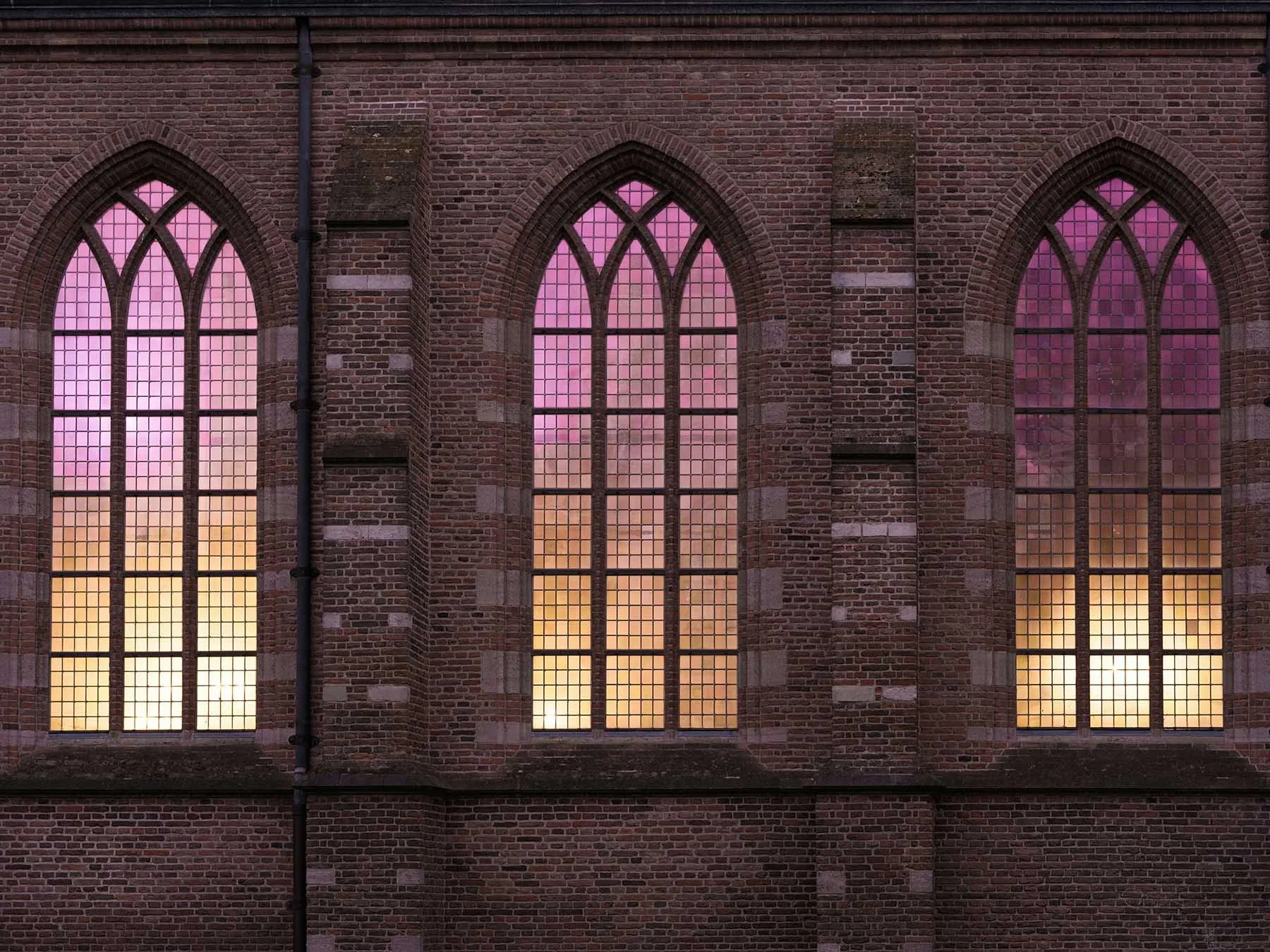
Photo by Haberdoedas on Unsplash