Shaken, But Not Overcome
This is the third post in the Becoming series.
In this series, I’m walking with some of the church mothers and fathers, not as dusty names from church history, but as companions for grief, calling, healing, courage, ordinary faithfulness, and the long road of being formed by Jesus.
This is our second week with Julian of Norwich. Last week, we sat with her beautiful and weighty words, “All shall be well, and all shall be well, and all manner of thing shall be well.” This week, I want to sit with another line from Julian (in Revelations of Divine Love) that has been holding me in a different way:
“He said not: Thou shalt not be tempested, thou shalt not be travailed, thou shalt not be afflicted; but He said: Thou shalt not be overcome.”
In more everyday language, it’s something like this: God didn’t say we wouldn’t be tossed around by the storms of life. He said we wouldn’t be overcome.
That feels important to me because I think a lot of us know in our heads that following Jesus doesn’t mean life will be easy, but we don’t always know what to do when that becomes practically true in our actual lives. We know Christians get sick. We know Christians grieve. We know Christians experience heartbreak, betrayal, injustice, burnout, disappointment, and confusion. We know Jesus Himself said, “You will have suffering in this world.” But sometimes, when suffering shows up in the middle of our very normal Tuesday, or in the middle of a calling we thought would be clearer, or in the middle of a family we thought would be healthier, we still feel surprised.
Or maybe we feel betrayed. Like somehow faith was supposed to make the hard things less hard.
Even this weekend, I had a tiny, very ordinary reminder of this. Saturdays are when I write. I had this post in my head. I knew where I wanted to go with it. I had my notes. I had the direction. And then Covid showed up again and made it very clear that my plans were cute, but my body had other ideas.
There was no pushing past it. Just because I wanted to write didn’t mean it was going to happen. Just because I knew what I wanted to say didn’t mean my brain and body were going to cooperate. That’s a small example, but it still tells the truth. We can be faithful and still be limited. We can be called and still be tired. We can have good intentions and still have bodies that remind us we are dust.
There are bigger examples, too. Right now, there’s so much loud noise in the church world about women in leadership. To me, it seems evident that Jesus dignified, taught, entrusted, commissioned, and welcomed women into significant kingdom work. Paul did, too, in ways that are often flattened or explained away. And yet, that doesn’t mean there aren’t cultural misalignments now that try to remove women, and future women, from leading in the church. Following Jesus doesn’t mean every space will welcome what God is forming in each of us.
Or maybe it’s family. Maybe somewhere along the way, we believed that because our whole family follows Christ, everything would always work out. Everyone would be healthy. Everyone would be honest. Everyone would choose humility. Everyone would want reconciliation. Everyone would know how to love one another well. But that’s not true either. We’re still human. We’re still selfish. We’re still prideful. We still get in our own way. We still hurt people. We still avoid what needs to be faced. We still choose self-protection over surrender.
Faith doesn’t make us less human. It gives us hope in the middle of being human.
That’s where Julian has been such a good companion for me. Her writings return, again and again, to the love of God revealed through the suffering of Christ. She doesn’t deny pain, temptation, trouble, or weakness. She doesn’t pretend the storm isn’t real. She simply refuses to give the storm the final word. She speaks of hope from inside human fragility, not from above it.
That matters to me because so much of my own healing process has felt like learning how fragile I actually am.
Last fall, I recognized that I needed to begin seeing a counselor. I’d received a late-life ADHD diagnosis and had started medication, and that was already helping me understand so much about myself. But I knew there were deeper things that needed attention, too. The first thing I noticed (even before the whole ADHD business) was that I wasn’t grieving my mom, at least not in the way I expected myself to grieve.
It felt wrong not to be in tears all the time. It felt like I was avoiding something, but I didn’t know what it was. I had this sense that there was something underneath the surface, but I couldn’t name it yet. I think there’s a blessing sometimes in not knowing what’s coming. If I had known what this season of counseling was going to uncover, I’m not sure I would’ve started.
I’m thankful for a dear friend and mentor who’s a local counselor and knew who to recommend. He kept gently pushing to make sure I followed through. (FYI - In case you’re wondering, I no longer see friends as my counselor. For me, there needs to be several layers of separation. I want my friends to remain my friends, and I want my counselor to be my counselor who is friendly. That distinction matters to me.)
It’s been eight long months of counseling. Some of that time has simply been my body learning to gear down after what felt like a multi-year state of fight-or-flight. Medication has helped. Time has helped. Having a safe place to talk has helped. And then I started recognizing patterns. Unhealthy patterns. Old patterns. Protection patterns that made sense once, but don’t serve me well now.
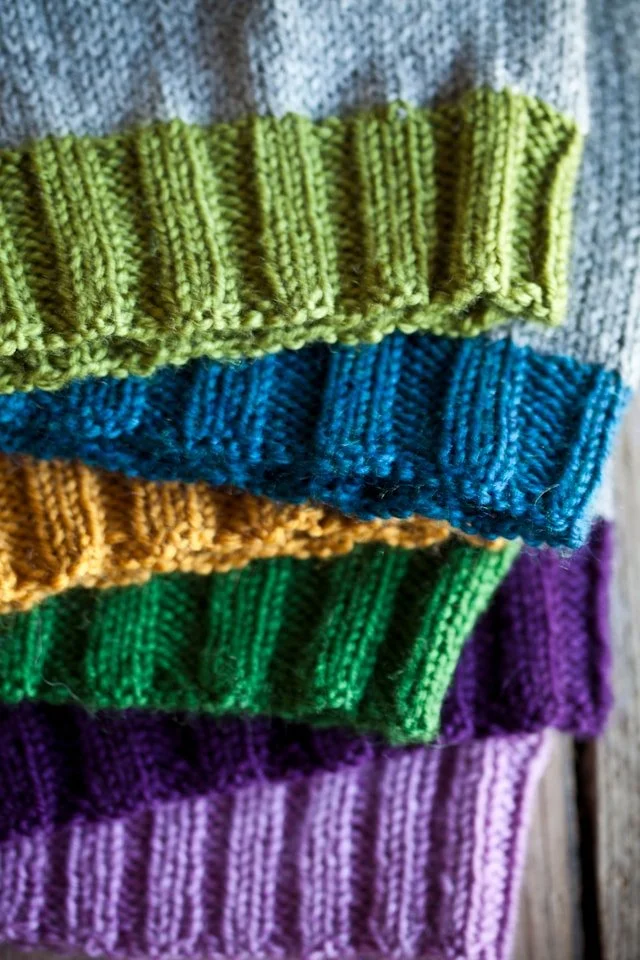
A few months ago, I was in a counseling session and started verbalizing something. As the words came out of my mouth, it felt like pulling at a stray thread on a sweater. You know that moment when you tug one little piece and suddenly realize the whole thing is unraveling at your feet?
That was what it felt like.
Things that had seemed to make sense before didn’t make sense anymore once I looked at the pile of threads. Stories I had told myself. Assumptions I had lived under. Ways I had protected myself. Ways I had interpreted people, God, myself, conflict, responsibility, silence, grief, and love.
One little thread. A whole sweater.
And let me tell you, there’s not a single easy thing about undoing a lifetime of poor emotional protection habits. Being a Christ-follower doesn’t make that work magically easier. It doesn’t mean you pull the thread and the Holy Spirit instantly knits you a new cardigan while you sleep.
Wouldn’t that be nice?
Instead, healing can feel like unraveling before it feels like restoration. It can feel like confusion before clarity. It can feel like grief before freedom. It can feel like seeing too much and not knowing what to do with all of it.
That’s why Julian’s words matter so much to me in this space. She doesn’t say we won’t be tempested. She doesn’t say we won’t be shaken, confused, exhausted, sick, disappointed, or undone by what we’re finally brave enough to see. She says we won’t be overcome.
That’s different.
And it’s better.
Because a faith that promises I won’t suffer doesn’t help me much when suffering comes. A faith that promises I won’t be confused doesn’t help me much when I’m sitting in a counselor’s office staring at the pile of threads. A faith that promises I won’t get sick, won’t be hurt, won’t face opposition, won’t grieve, won’t wrestle, and won’t be misunderstood is not a faith that can survive real life.
But a faith that says Christ is with me in the waters, in the fire, in the unraveling, in the groaning, and in the storm? That kind of faith holds.
Isaiah says it this way:
“Do not fear, for I have redeemed you; I have called you by your name; you are mine. When you pass through the waters, I will be with you, and the rivers will not overwhelm you. When you walk through the fire, you will not be scorched, and the flame will not burn you. For I am the LORD your God, the Holy One of Israel, and your Savior.” Isaiah 43:1-3
Notice what God does not say. He doesn’t say, “You won’t pass through waters.” He doesn’t say, “You won’t walk through fire.” He says, “I will be with you.”
He also doesn’t say, “if you…” he says, “when you…” There is no escaping the hard places of life – they are going to be part of each of our journeys. Knowing that we are not alone is what makes them bearable.
The promise is not the absence of hard things. The promise is the presence of God in them.
Paul says something similar in 2 Corinthians:
“Now we have this treasure in clay jars, so that this extraordinary power may be from God and not from us. We are afflicted in every way but not crushed; we are perplexed but not in despair; we are persecuted but not abandoned; we are struck down but not destroyed. We always carry the death of Jesus in our body, so that the life of Jesus may also be displayed in our body.” 2 Corinthians 4:7-10
Clay jars feels about right. Fragile. Breakable. Ordinary. Not exactly impressive packaging. And yet, God puts treasure there. We’re afflicted, but not crushed. Perplexed, but not in despair. Struck down, but not destroyed. Tempested, but not overcome.
This is not denial. This is not pretending. This is not “everything happens for a reason” slapped over someone’s pain like a cheap sticker.
This is resurrection hope.
Jesus Himself said:
“I have told you these things so that in me you may have peace. You will have suffering in this world. Be courageous! I have conquered the world.” John 16:33
There it is. Clear as day. You will have suffering in this world. And also, be courageous.
Not because the suffering isn’t real. Not because you’re strong enough. Not because you can explain it all. Not because it won’t hurt. Be courageous because Jesus has conquered the world. That is the foundational thread of hope. Not a decorative thread. Not an extra thread. Not the thread we add at the end when everything else looks pretty. It’s the thread that holds when everything else is unraveling.
Maybe that’s the invitation for us. To stop interpreting hard as hopeless. To stop assuming struggle means abandonment. To stop believing that being shaken means we’ve failed. Maybe the unraveling isn’t the end of the story. Maybe the unraveling is where God begins to show us what was never holding us together in the first place. Maybe what comes undone in the presence of Christ can also be remade in the presence of Christ.
So, if you’re in a storm, or a hard season, or a body that won’t cooperate, or a church space that feels complicated, or a family story that hurts, or a healing process that feels like a sweater unraveling at your feet, Julian’s witness is for you.
You may be tempested.
But in Christ, you won’t be overcome.
You might also like other posts from this series:
Intro: Beauty in the Bruise
Part 1: When Restlessness is Really Homesickness
Part 2: All Shall Be Well: Even Here
Part 3: Shaken But Not Overcome
Part 4: Prayers From the Edge of Goodbye
Part 5: The Greening Grace of God
Part 6: God In the Reheated Coffee
Part 7: The Holy Work of Hello
Part 8: When Humility Stops Hiding
Part 9: When Fear Is Loud But Jesus Is Lord
Part 10: The Long Mercy of Formation
Photo by Maria Kovalets on Unsplash