
When Restlessness Is Really Homesickness
Companions for the Becoming: Augustine of Hippo
This is the first post in a new series I’m calling Becoming.
In this series, I’ll be looking at the lives and words of some of the church mothers and fathers, not as dusty old figures from church history, but as companions who help us walk through grief, calling, healing, courage, ordinary faithfulness, and the long road of being formed by Jesus.
I can’t think of a better place to begin than with Augustine of Hippo.
Which is slightly funny to me because, for a long time, I had no idea who Augustine of Hippo was. I don’t remember being taught why he mattered or why I should care about anything written by someone called a “church father.” For a long time, those words felt like they belonged outside the borders of what I’d been taught was safe.
Church fathers.
Church mothers.
Ancient writings.
The early church.
The word catholic with a lowercase c.
And certainly anything connected to Catholic history or tradition.
All of it felt suspicious.
Or maybe, more honestly, I’d been taught to be suspicious.
For years, curiosity didn’t feel like a gift. It felt dangerous. Questions weren’t always welcomed, especially questions about church, theology, Scripture, history, or the things I’d been told I was simply supposed to accept. So, I learned to hold a lot of my questions quietly. I learned to tuck them away before they made other people uncomfortable. I learned, in some ways, to treat curiosity like a threat to faith instead of one of the ways faith can grow.
But then life happened.
Church hurt happened.
Leaving a fundamentalist church happened.
Being hurt badly in the next church happened.
And somewhere in the ache and confusion of trying to detangle what was true from what had been harmful, I started to get curious.
Not careless.
Not rebellious.
Not determined to throw everything away.
Just curious.
Curious about what I’d been taught.
Curious about what I’d never been taught.
Curious about why certain words had been made to feel frightening.
Curious about why the story of the Church seemed so much bigger, older, messier, richer, and more beautiful than the small slice I’d inherited. It was like realizing I was thirsty and not knowing just how thirsty I’d been until someone handed me the first sip of cold water.
I’ll never forget one of the earliest places where that door of curiosity started to open.
After the Rocket Scientist and I got married, we were part of an incredible Sunday School class for nearly-newlyweds. Our class directors are still mentors in our lives, and by the grace of God, we live in the same city all these years later. The couple who taught that class changed the way I looked at my faith in more ways than they probably even know.
My poor scientific husband had already been patiently navigating all of my “why” questions.
Why creation?
Why space?
Why the speed of light?
Why doesn’t this make sense in my head?
Why was I taught this so rigidly?
Why does asking feel like I’m doing something wrong?
Why does the universe feel so big and my understanding of God feel so small?
One of our teachers, Randy Bassett, was a professor of geology at the university. Part of his field of study involved ancient rivers and the way things like waste can follow those old river paths as they seep into the ground. One night, we took Randy with us to set up the telescope in a church parking lot way outside the city. We were there for more than six hours.
Six hours. In the dark. Looking at the sky. Asking questions.
And that blessed man answered me in ways I could understand.
He didn’t shame me for asking.
He didn’t panic because I was wondering.
He didn’t act as though God was fragile or faith would collapse if I looked too closely.
He asked me questions, too. He helped me interrogate not only what I believed, but how I’d gotten there. He helped me begin to see that a belief system can feel solid simply because no one has ever allowed you to examine it.
That night didn’t answer all my questions. It did something better. It opened the door.
From there came discipleship groups, leadership groups, fiery family lunches where I pushed back on nearly everything I’d been taught, and eventually seminary. Someone once told me I reminded them of the Bereans, the people in Acts who received the message with eagerness and examined the Scriptures daily to see if these things were so. I see that now.
Not because I’m trying to be difficult. Not because I enjoy stirring the pot: although, let’s be honest, sometimes the pot needs a little stir. But because curiosity became part of how God rebuilt my faith.
Then came seminary.
Theology 1 and Theology 2 were in my first year, and my mind was blown wide open. But Church History 1 and Church History 2 during my second year had me hook, line, and sinker.
I wanted to know more and more.
I still do.
I want to see the places.
I want to experience the stories.
I want to soak in the words of those who lived so much closer in time and space to Jesus walking the earth. I almost get homesick when I study church history. That’s the only word I can think of, although sometimes it feels more like starving. I want to know where we came from. I want to know how we got here. I want to know how this thing called the Church, in all her beauty and brokenness, has carried the gospel across centuries.
Somewhere along the way, I stopped being afraid of the word catholic. Not only in the sense of the Roman Catholic Church, but in the older meaning of the greater, universal Church: the wide and ancient family of believers from whom all our little branches and denominations have grown.
I had to reckon with how much I didn’t know.
I had to reckon with how much I’d misunderstood.
I had to reckon with the fact that some of my certainty hadn’t come from deep study, but from inherited fear.
Curiosity has made me want to do better.
It’s made me want to interrogate my past beliefs and my current faith. Not so I can dismantle everything for the sake of dismantling, but so I can build on what’s true, good, beautiful, and rooted in Christ. Maybe that’s something we should always be doing.
Asking.
Seeking.
Examining.
Returning.
Learning.
Repenting.
Becoming.
And this is where Augustine of Hippo becomes such a meaningful first companion for this series.
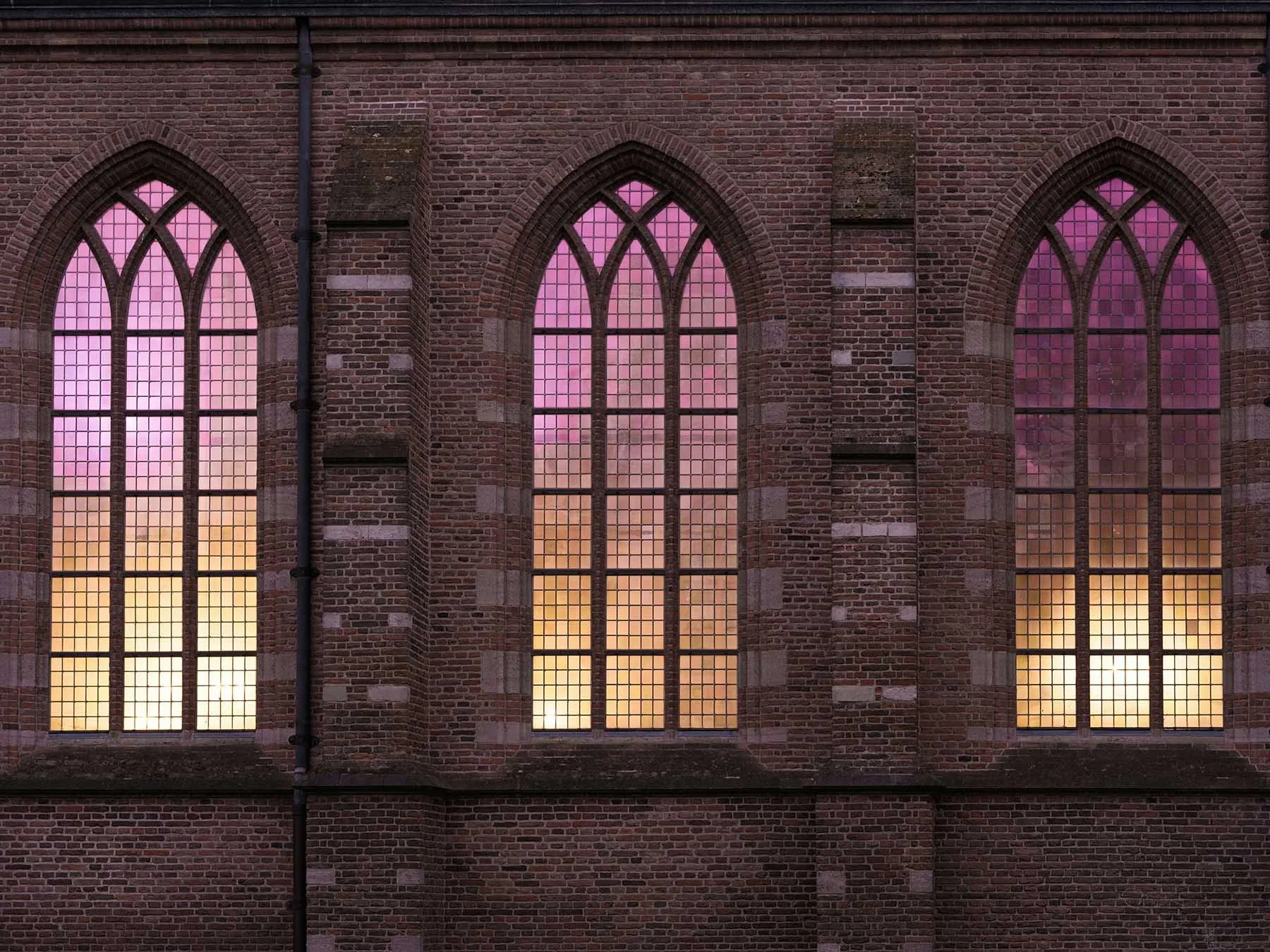
Augustine wasn’t born with stained-glass certainty. He wasn’t some serene church father who floated into theology on a cloud of holy Latin. Augustine was brilliant, ambitious, complicated, passionate, intellectually hungry, morally conflicted, and deeply restless.
He was born in North Africa in the fourth century. His mother, Monica, was a devout Christian who prayed for him for years. His father, Patricius, wasn’t initially a Christian. Augustine was educated, gifted, and driven. He loved learning. He loved language, ideas, influence, and the power of words. He also spent years chasing fulfillment in places that couldn’t finally hold the weight of his soul.
He searched through different philosophies and belief systems.
He wrestled with Christianity.
He had questions about Scripture.
He struggled with desire.
He wanted truth, but he also wanted his own way.
If you read his Confessions, you don’t meet a flat, polished saint. You meet a man looking back over the tangled story of his life and tracing the mercy of God through all of it.
Eventually, Augustine came under the influence of Ambrose, the bishop of Milan, whose preaching helped him hear Scripture differently. Augustine began to see that some of the things he’d dismissed may have been things he’d misunderstood. His conversion wasn’t simple or instant in the sense that everything before it had been easy and clear. It was the fruit of years of searching, resisting, longing, listening, and being pursued by grace.
He would go on to become bishop of Hippo, a pastor, preacher, theologian, and one of the most influential voices in Christian history. His writings, especially Confessions and The City of God, shaped generations of Christian thought.
The City of God was one of the first works of his that I read, and I remember realizing that the Church has been asking enormous questions for a very long time.
Questions about suffering.
Empire.
Power.
Citizenship.
History.
Hope.
What it means to belong to the kingdom of God while living in the kingdoms of this world.
Augustine mattered because he helped the Church think deeply about grace, sin, desire, love, the human heart, the nature of God, and the way our lives are always being aimed toward something. He influenced theologians and pastors for centuries. But before he was an influence, he was a restless man. And that’s what makes him feel like a companion to me. Near the beginning of Confessions, Augustine prays these famous words:
“You have made us for Yourself, and our hearts are restless till they find rest in You.”
I think that line has lasted because it tells the truth about us.
We’re restless creatures.
We ache.
We long.
We chase.
We question.
We reach.
We try to make homes out of things that were never meant to house us.
Sometimes our restlessness shows up as ambition. Sometimes it shows up as anxiety. Sometimes it looks like overworking, overthinking, over-serving, over-functioning, or needing to understand every single thing before we can exhale.
Sometimes it shows up as theological hunger. Sometimes as grief. Sometimes as frustration. Sometimes as the unsettled feeling that there has to be more than the small answers we were handed.
For much of my life, I think I interpreted restlessness as a problem. Maybe it meant I wasn’t trusting God enough. Maybe it meant I was being too much. Maybe it meant I should stop asking so many questions. Maybe it meant I was wandering.
But Augustine gives us another possibility. What if some of our restlessness isn’t rebellion? What if some of it is homesickness? What if the ache beneath the ache is the soul remembering that it was made for God?
That doesn’t mean every question is holy or every longing is rightly ordered. Augustine would never say that. His own story is full of disordered loves and misplaced desires. But he helps us see that our longings matter. Our questions matter. Our hunger matters. Not because they’re always right, but because they reveal where our hearts are searching for rest.
The psalmist says it this way:
“God, you are my God; I eagerly seek you. I thirst for you; my body faints for you in a land that is dry, desolate, and without water.”
Psalm 63:1
That isn’t polite spiritual interest.
That’s thirst.
That’s ache.
That’s the language of someone who knows they’re dry and can’t manufacture water for themselves.
And Jesus speaks to the weary and burdened with this invitation:
“Come to me, all of you who are weary and burdened, and I will give you rest. Take my yoke upon you and learn from me, because I am lowly and humble in heart, and you will find rest for your souls. For my yoke is easy and my burden is light.”
Matthew 11:28–30
Jesus doesn’t shame the weary for being weary. He invites them to come. He doesn’t scold the burdened for having burdens. He offers rest. Not the kind of rest that comes from having all the answers. Not the kind of rest that comes from never grieving, never questioning, never wrestling, never changing. The rest Jesus offers is deeper than certainty. It’s the rest of being held by the One who is lowly and humble in heart. That’s the rest I think Augustine was chasing long before he knew how to name it.
And maybe that’s true for some of us, too.
Maybe the questions we were afraid to ask became the very place God began rebuilding our faith. Maybe the curiosity we were told to fear became a doorway into deeper worship. Maybe the ache that felt like failure was actually invitation. Maybe the thirst was telling the truth.
I’m still learning this. I’m still living with unfinished threads: ministry, seminary, writing, grief, counseling, ADHD discovery, caregiving, leadership, family, and the long, slow work of becoming whole.
Some days it all feels scattered. Some days I feel like I’m carrying too many stories, too many questions, too many longings, too many responsibilities, too many books I want to read and places I want to see and thoughts I want to chase down. But I’m beginning to believe that not all of that restlessness is something to silence.
Some of it needs surrender.
Some of it needs healing.
Some of it needs wisdom and boundaries and a nap! (Let’s be honest.)
But some of it is holy hunger.
Some of it is the Spirit inviting me to keep seeking. Some of it is the deep mercy of God reminding me that I wasn’t made to find my final rest in approval, certainty, productivity, ministry, knowledge, family, or even healing itself.
I was made for Him.
And the good news is that God isn’t impatient with our becoming.
Paul writes:
“I am sure of this, that he who started a good work in you will carry it on to completion until the day of Christ Jesus.”
Philippians 1:6
That’s such a mercy. God isn’t finished with us.
He isn’t threatened by honest questions.
He isn’t undone by our curiosity.
He isn’t surprised by the tangled paths we’ve taken.
He isn’t standing at the end of the road with crossed arms, irritated that it took us so long to get there.
He’s the One who begins the good work.
He’s the One who carries it on.
He’s the One who’ll complete it.
So maybe Augustine is a good companion for the beginning of this Becoming series because he reminds us that the road home is often winding.
Sometimes it passes through questions we were afraid to ask.
Sometimes it passes through the grief of realizing we were taught poorly.
Sometimes it passes through the humility of admitting we were wrong.
Sometimes it passes through books, mentors, telescopes, ancient rivers, seminary classes, and six-hour conversations under the night sky.
And sometimes, by grace, we realize the restlessness wasn’t the enemy.
It was the thirst that led us to Living Water.
You might also like other posts from this series:
Intro: Beauty in the Bruise
Part 1: When Restlessness is Really Homesickness
Part 2: All Shall Be Well: Even Here
Part 3: Shaken But Not Overcome
Part 4: Prayers From the Edge of Goodbye
Part 5: The Greening Grace of God
Part 6: God In the Reheated Coffee
Part 7: The Holy Work of Hello
Part 8: When Humility Stops Hiding
Part 9: When Fear Is Loud But Jesus Is Lord
Part 10: The Long Mercy of Formation
Photo by Patrick Hendry on Unsplash